Showing posts with label easy listening. Show all posts

Monday, November 16, 2026

The Gene Rains Group • Rains In The Tropics


Review from AmbientExotica (by AmbientExotica): The review describes the album as a colorful musical journey through exotic landscapes, highlighting the combination of Gene Rains's vibraphone with Bryon L. Peterson's piano, Archie Grant Jr.'s bass and Allen Watanabe's percussion. It notes the atmospheric character of “Bangkok Cock Fight,” originally composed by Les Baxter, and emphasizes the interplay of piano, vibraphone and percussion that establishes the group's distinctive tropical sound. https://www.ambientexotica.com/exorev102_generains_ritt/

/////// 

Resena de AmbientExotica (por AmbientExotica): La resena describe el album como un viaje musical lleno de color por paisajes exoticos, destacando la combinacion del vibrafono de Gene Rains con el piano de Bryon L. Peterson, el contrabajo de Archie Grant Jr. y la percusion de Allen Watanabe. Senala el caracter atmosferico de “Bangkok Cock Fight”, compuesto originalmente por Les Baxter, y destaca la interaccion entre piano, vibrafono y percusion que establece el sonido tropical distintivo del grupo. https://www.ambientexotica.com/exorev102_generains_ritt/ 


Saturday, November 14, 2026

Kai Winding • The Incredible Kai Winding Trombones


Trombonist Kai Christen Winding (pronounced ki-win-ding) was one of the founding fathers of be-bop music and truly one of the finest-ever jazz trombonists.

As a sideman to bop’s reigning kings “ Fats Navarro, Miles Davis, Charlie Parker, Dizzy Gillespie and Tadd Dameron “ he was more a bridesmaid than a bride. Winding recorded too infrequently as a leader during this period and none of his compositions ever really caught on. Indeed, he was adept at putting a defining stamp on others’ compositions “ a trait he picked up while outlining the artistry of Stan Kenton’s sound during the mid 1940s.

Kai was born on May 18, 1922, in Aarhaus, Denmark. He came to the United States with his family in 1934. In 1940, he made his professional debut as trombonist with Shorty Allen’s band. He played with the bands of Sonny Dunham and Alvino Rey before joining the U.S. Coast Guard during World War II. After becoming a civilian in 1945, he worked with Benny Goodman’s highly popular band and moved onto Stan Kenton’s orchestra, where he helped defined the brassy Kenton sound and, quickly became a featured soloist. Thereafter, he hooked himself up with a number of emerging stars of be-bop, the “new jazz,” and recorded prolifically “ most notably, as part of one of the nonets featured on the historic “The Birth of the Cool” (Capitol/1949).

Winding recorded and performed prolifically during the 1950s, as a leader and “ with distinction “ behind a number of significant and popular soloists such as Sonny Stitt, Billy Eckstein, Neal Hefti, Woody Herman, Chris Connor, Sylvia Syms.

Still, the trombone was considered an unusual instrument to lead a combo. So it was with prescient oddity that in 1954, producer Ozzie Cadena proposed the marriage of two trombones “ Winding’s quick-witted mellifluousness with fellow trombonist J.J. Johnson’s hard-edged angularity. The two leaders clicked together musically right away (check out Savoy “Jay& Kai”) and, surprisingly, became a hugely popular club attraction and critical favorite. Jay and Kai - or “Kai and Jay” or “J.J. & K” or “J & K” or any other of a number of other combinations - was born.

The duo recorded eight highly popular “ and consistently artistic “ albums over the next two years for the Savoy, RCA, Bethlehem, Prestige and Columbia labels. It was during this period that Kai's great compositional skill was finally recognized with such memorable tunes as “Don't Argue,” “Wind Bag,” “That's How I Feel About You,” “Gong Rock,” “Jeanne” and “Caribe.”

At this point, Kai Winding was a well-known “ and bankable “ entity. In addition to continuing session work and well-paid gigs, Winding recorded several “concept” oriented albums for Columbia where he embarked on his own remarkable - and successful - concept of a four-trombone front line.

Producer Creed Taylor, who has always recognized a sale-able sound (and produced the duo’s fourth album on Bethlehem from 1955, K + JJ), kept close tabs on Kai Winding. The producer brought the trombonist in for the delightful 1958 album, “The Axidentals “ with the Kai Winding Trombones” (ABC Paramount) and reunited with him when the producer helmed the inception of Impulse Records “ for the Kai and J.J. reunion (The Great Kai & J.J. “ with the catalog number “A-1”) and the marvelous solo record “The Incredible Trombones of Kai Winding.”

When Creed Taylor accepted a lucrative offer from MGM to head the jazz division of their record label, Verve, Kai Winding was invited too. Winding recorded a dozen albums and 4 non-LP 45-rpm records with Creed Taylor during his stay at the label (1961-67). The music Winding made during this time is well worth hearing and, surprisingly, uncharacteristic of his recordings before or after.

This is the period that my discography is most concerned with “ and when the be-bop legend recorded what I consider some of his most interesting material. There’s no doubt that Verve Records provided Kai Winding with the most popularity he’d known during his entire career and, in some odd and sometimes wonderful coincidences, provided the great trombone player, composer and arranger with the most notable music of his career.

Kai Winding's first Verve record was the wondrous, Latin-esque “Kai Olé”(1961). Still firmly rooted in bebop, Winding goes a bit further South of the Border than he did on his Columbia records, where he simply added a conga or a bongo to spice up the mix. Winding quickly followed with 1962's “Suspense Times in Jazz,” (1962), a collection of “crime jazz” (lots of Henry Mancini covers!), arranged by either Winding or the great Oliver Nelson.

Next came “Solo,” (1963), one of the first of Kai Winding's many 1963 recordings and a landmark in the trombonist's career. While not exactly true to its title, since it was a trombone-with-rhythm-section date, “Solo” did represent Winding's first solo recording where he was the only horn player! The record also featured several titles that celebrated Winding's role as the musical director of New York's Playboy Club - a position the musician maintained throughout the 1960s. “Solo” is, perhaps, Kai Winding's best jazz record on Verve, and maybe one of his least known for the label.

The next record, “Soul Surfin” (1963) changed all the rules. Quite unexpectedly, Kai Winding's cover of Riz Orolani's “More (Theme From Mondo Cane)” became a top ten hit in 1963 - spawning innumerable covers from the bachelor-pad crowd. The album, a collection of somewhat interesting surf tunes featured Winding and guitarist Kenny Burrell behind the oddly-annoying ondioline (played, without credit, by the legendary Jean Jacques Perrey!). After the single's unbelievable success, the album was renamed “More.”

Next up was the rather strange album titled “Kai Winding” (1963). The record was also known by the title”The Lonely One” due to the release of the one 45 from the album. This one, which features some pretty rockin' tunes, notably Claus Ogerman's hip “Get Lost,” certainly features Winding. But the trombonist barely solos and hardly ever takes a lead line. This writer guesses that the album was intended to be a feature for Garry (or “Gary,” or “Gerry”) Sherman, the arranger of many of the album's tunes. But the success of “More” encouraged Verve to issue the record (or a bunch of recordings that included Kai Winding) under the trombonist's name.

“Mondo Cane #2” (1963-64) next featured Winding covering Nino Oliviero's sequel (and not as good as the oriiginal) theme to Winding's top ten hit. Covering several Ogerman tunes here (notably “Python”) and a few originals (the best, which is “ Simian Theme”), Winding seems barely present on this record. Jean Jacques Perrey is again said to have played the ondioline (credited to Winding!), which dominates the sound and solos of the record. This is not the record for those that admire hearing Winding's magical trombone sound. When the hits didn't follow, Creed Taylor moved Kai Winding away from the surfing (and, thankfully, the ondioline) gimmick to other gimmick-y pastures. “Modern Country” (1964) followed, matching Kai's trombone and arrangements with the Anita Kerr Singers and a Nashville rhythm section. Somehow, the concept (which Taylor would explore again with Hubert Laws for CTI) yielded some exceptionally notable performances. Check out “Busted,” “Wolverton Mountain” and “Dang Me.”

Getting back to basics, Taylor and Winding thereafter conceived “Rainy Day” (1965) and The In Instrumentals” (1965), both which - much in the style of the time - attempt to place Kai Winding's sound into more contemporary arenas.

Things started gelling again when the pair conceived Kai Winding's excellent “More Brass” (1966), a not-so-veiled reference to both the trombonist's biggest hit and his best asset. The record yielded several credible performances of contemporary pop - highlighted especially by the delicate harpsichord styling of Hank Jones - that still had that sound of the past (and a marvelous re-arrangement of Winding's hit, “More”).

But perhaps the “hippest” Kai Winding ever got for Verve was on his next record, 1966's”Dirty Dog.” Featuring his patented four-trombone line-up with Carl Fontana, Urbie Green and Bill Watrous, Winding surrounded himself well with two-handed genius and funk overlord Herbie Hancock, bassist Bob Cranshaw, drummer Grady Tate and guitarist Al Gafa (under the pseudonym “Buzzy Bavarian,” to hide, perhaps an unusually rock-ish quality he lays down here). Winding traverses fast takes of the Hancock hits “Cantaloupe Island” and “Blind Man, Blind Man” and Gafa's surprisingly funky title track.

Winding's finest work with producer Creed Taylor, however, remains their last collaboration for Verve. “Penny Lane & Time” (1967) is an incredible accomplishment of pure pop finesse (shocking, given the number of Beatles covers here) and magical jazz arrangement (courtesy of Kai Winding himself). Winding pairs his mellifluous trombone with a four-part flute choir (featuring Hubert Laws, Danny Bank, Romeo Penque, Jerry Dodgion and Jerome Richardson). The result, probably inspired by Winding's former partner, arranger Claus Ogerman, is truly ethereal. Winding ended his 12-album run at Verve much the way he began it: with great artistic beauty.

Shortly thereafter, Creed Taylor left Verve Records to form his own CTI Records label. Winding recorded yet another album - that remains unreleased - for the MGM label (with Taylor, most likely) before Taylor reunited Winding with J.J. Johnson. The pair collaborated on three high-profile reunion projects at A&M/CTI during the late 1960s. Winding also did session work at the time for such A&M/CTI recordings as Paul Desmond's “Summertime,” and Quincy Jones's “Walking in Space.”

By the early 1970s, Kai Winding toured extensively with The Giants Of Jazz, featuring such old comrades as Dizzy Gillespie and Sonny Stitt and legendary masters Thelonius Monk and Art Blakey. He was also caught on a series of records which captured the 1972 Newport in New York Festival, reuniting with such early cohorts as Billy Eckstein, Flip Phillips and Zoot Sims.

Winding eventually chose to play when he felt like it, settling in Spain with his third wife, Ezshwan. Records during these years were sparse and on very small labels: two for the Glendale label and two for Lionel Hampton's Who's Who In Jazz label. Winding still performed on a regular basis, pairing up with the great Curtis Fuller in 1979 for two excellent “Giant Bones” recordings. Finally, Winding recorded an incredible “Trombone Summit” for the German MPS label (1980), heading a bone quartet featuring Albert Mangelsdorff, Bill Watrous and Jiggs Whigham - even reuniting one last time with J.J. Johnson for “All Star Jam Live- - Aurez Jazz Festival '82” (1982).

Unfortunately, after a long and artistically fulfilling career, Kai Winding succumbed to a brain tumor in a New York hospital on May 6, 1983, just shy of his 61st birthday. One of his sons, Jai, has kept Kai Winding's musical legacy alive as a respected - and busy! - session keyboard player for a wide variety of artists including George Benson, Michael Jackson, Madonna, America, The Eagles, Boz Scaggs, Jackson Browne, Molly Hatchet, Ted Nugent and many, many others.

Kai Winding's bop legacy has been kept alive in a variety of worthwhile reissues and countless compilations. However, one hopes that eventually major labels will concede to acknowledge the considerable contribution Kai Winding made during the 1960s as part of Verve Records.

Source: Doug Payne

///////

El trombonista Kai Christen Winding fue uno de los padres fundadores de la música be-bop y uno de los mejores trombonistas de jazz de todos los tiempos.

Como acompañante de los reyes del bop, Fats Navarro, Miles Davis, Charlie Parker, Dizzy Gillespie y Tadd Dameron, fue más una dama de honor que una novia. Winding grabó muy pocas veces como líder durante este período y ninguna de sus composiciones llegó a ser realmente popular. De hecho, era adepto a poner un sello definitorio en las composiciones de los demás, un rasgo que recogió mientras esbozaba el arte del sonido de Stan Kenton a mediados de los años 40.

Kai nació el 18 de mayo de 1922, en Aarhaus, Dinamarca. Llegó a los Estados Unidos con su familia en 1934. En 1940, hizo su debut profesional como trombonista con la banda de Shorty Allen. Tocó con las bandas de Sonny Dunham y Alvino Rey antes de unirse a la Guardia Costera de los Estados Unidos durante la Segunda Guerra Mundial. Después de convertirse en civil en 1945, trabajó con la banda de Benny Goodman, que era muy popular, y pasó a la orquesta de Stan Kenton, donde ayudó a definir el sonido broncínea de Kenton y, rápidamente, se convirtió en un solista destacado. A partir de entonces, se relacionó con varias estrellas emergentes del be-bop, el "nuevo jazz", y grabó prolíficamente, "sobre todo, como parte de uno de los noneto que apareció en el histórico "The Birth of the Cool" (Capitol/1949).

Winding grabó y tocó prolíficamente durante el decenio de 1950, como líder y "con distinción" detrás de varios solistas importantes y populares como Sonny Stitt, Billy Eckstein, Neal Hefti, Woody Herman, Chris Connor, Sylvia Syms.

Aún así, el trombón era considerado un instrumento inusual para dirigir un combo. Así que fue con una clarividente rareza que en 1954, el productor Ozzie Cadena propuso el matrimonio de dos trombones " La melifluidad de Winding con la angularidad del trombonista J.J. Johnson. Los dos líderes se unieron musicalmente de inmediato (vean el Savoy "Jay& Kai") y, sorprendentemente, se convirtieron en una atracción muy popular del club y en el favorito de la crítica. Jay y Kai - o "Kai y Jay" o "J.J. & K" o "J & K" o cualquier otra de una serie de otras combinaciones - nació.

El dúo grabó ocho álbumes muy populares y consistentemente artísticos en los dos años siguientes para los sellos Savoy, RCA, Bethlehem, Prestige y Columbia. Fue durante este período que la gran habilidad compositiva de Kai fue finalmente reconocida con temas tan memorables como "Don't Argue", "Wind Bag", "That's How I Feel About You", "Gong Rock", "Jeanne" y "Caribe".

En ese momento, Kai Winding era una entidad muy conocida y financiable. Además de seguir trabajando en sesiones y en conciertos bien pagados, Winding grabó varios álbumes orientados al "concepto" para Columbia, donde se embarcó en su propio concepto notable - y exitoso - de una línea de frente de cuatro trombones.

El productor Creed Taylor, que siempre ha reconocido un sonido vendible (y produjo el cuarto álbum del dúo en Belén a partir de 1955, K + JJ), mantuvo una estrecha relación con Kai Winding. El productor trajo al trombonista para el encantador álbum de 1958, "The Axidentals " with the Kai Winding Trombones" (ABC Paramount) y se reunió con él cuando el productor dirigió la creación de Impulse Records " para la reunión de Kai y J.J. (The Great Kai & J.J. " con el número de catálogo "A-1") y el maravilloso disco en solitario "The Incredible Trombones of Kai Winding".

Cuando Creed Taylor aceptó una lucrativa oferta de MGM para dirigir la división de jazz de su sello discográfico, Verve, Kai Winding también fue invitado. Winding grabó una docena de álbumes y 4 discos no LP de 45 rpm con Creed Taylor durante su estancia en la discográfica (1961-67). La música que Winding hizo durante este tiempo es digna de ser escuchada y, sorprendentemente, poco característica de sus grabaciones antes o después.

Este es el período que más me preocupa en mi discografía " y cuando la leyenda del be-bop grabó lo que considero uno de sus materiales más interesantes. No hay duda de que Verve Records proporcionó a Kai Winding la mayor popularidad que había conocido durante toda su carrera y, en algunas extrañas y a veces maravillosas coincidencias, proporcionó al gran trombonista, compositor y arreglista la música más notable de su carrera.

El primer disco de Verve de Kai Winding fue el maravilloso y latino "Kai Olé" (1961). Todavía firmemente arraigado en el bebop, Winding va un poco más al sur de la frontera que en sus discos de Columbia, donde simplemente añadió una conga o un bongó para darle sabor a la mezcla. A Winding le siguió rápidamente el "Suspense Times in Jazz" (1962), una colección de "crime jazz" (¡muchas portadas de Henry Mancini!), arreglada por Winding o por el gran Oliver Nelson.

Luego vino "Solo" (1963), una de las primeras grabaciones de Kai Winding en 1963 y un hito en la carrera del trombonista. Aunque no es exactamente fiel a su título, ya que era una fecha de trombón con sección rítmica, "Solo" representó la primera grabación en solitario de Winding en la que él era el único trompetista. El disco también incluía varios títulos que celebraban el papel de Winding como director musical del Playboy Club de Nueva York, una posición que el músico mantuvo durante los años 60. "Solo" es, quizás, el mejor disco de jazz de Kai Winding en Verve, y quizás uno de los menos conocidos por el sello.

El siguiente disco, "Soul Surfin" (1963) cambió todas las reglas. De forma bastante inesperada, la versión de Kai Winding de "More (Theme From Mondo Cane)" de Riz Orolani se convirtió en un éxito entre los diez primeros en 1963, generando innumerables versiones de los solteros. El álbum, una colección de temas de surf un tanto interesantes, presentaba a Winding y al guitarrista Kenny Burrell detrás de la extrañamente molesta ondolina (¡interpretada, sin crédito, por el legendario Jean Jacques Perrey!). Después del increíble éxito del single, el álbum fue rebautizado como "More".

El siguiente fue el extraño álbum titulado "Kai Winding" (1963). El disco también era conocido por el título de "The Lonely One" debido al lanzamiento del uno 45 del álbum. Este, que contiene algunas canciones muy rockeras, en particular la cadera de Claus Ogerman "Get Lost", ciertamente contiene "Winding". Pero el trombonista apenas hace solos y casi nunca toma una línea principal. Este escritor adivina que el álbum estaba destinado a ser un reportaje para Garry (o "Gary" o "Gerry") Sherman, el arreglista de muchas de las canciones del álbum. Pero el éxito de "More" animó a Verve a publicar el disco (o un montón de grabaciones que incluían a Kai Winding) bajo el nombre del trombonista.

"Mondo Cane #2" (1963-64) fue el siguiente tema de Winding que cubría la secuela de Nino Oliviero (y no tan bueno como el original) del top diez de Winding. Cubriendo varias melodías ogermanas aquí (notablemente "Python") y unos pocos originales (el mejor, que es "Tema de Simio"), Winding parece apenas presente en este disco. Se dice que Jean Jacques Perrey ha tocado la ondiolina (acreditada a Winding!), que domina el sonido y los solos del disco. Este no es un disco para aquellos que admiran el sonido mágico del trombón de Winding. Cuando los éxitos no siguieron, Creed Taylor alejó a Kai Winding del truco del surf (y, afortunadamente, de la ondiolina) a otros pastos de trucos. Siguió "Modern Country" (1964), que combinaba el trombón y los arreglos de Kai con los cantantes de Anita Kerr y una sección rítmica de Nashville. De alguna manera, el concepto (que Taylor volvería a explorar con Hubert Laws para CTI) dio lugar a algunas actuaciones excepcionalmente notables. Echa un vistazo a "Busted", "Wolverton Mountain" y "Dang Me".

Volviendo a lo básico, Taylor y Winding concibieron posteriormente "Rainy Day" (1965) y "The In Instrumentals" (1965), ambas cosas que -muy al estilo de la época- intentan situar el sonido de Kai Winding en ámbitos más contemporáneos.

Las cosas comenzaron a ponerse de nuevo en marcha cuando la pareja concibió el excelente "More Brass" (1966) de Kai Winding, una referencia no muy revelada tanto al mayor éxito del trombonista como a su mejor activo. El disco produjo varias interpretaciones creíbles de pop contemporáneo, destacadas especialmente por el delicado estilo de clavicémbalo de Hank Jones, que todavía tenía ese sonido del pasado (y una maravillosa reorganización del éxito de Winding, "More").

Pero quizás el Kai Winding más "hippie" que jamás haya conseguido para Verve fue en su siguiente disco, "Dirty Dog" de 1966. Presentando su patentado conjunto de cuatro trombones con Carl Fontana, Urbie Green y Bill Watrous, Winding se rodeó de un genio de las dos manos y del señor del funk Herbie Hancock, del bajista Bob Cranshaw, del baterista Grady Tate y del guitarrista Al Gafa (bajo el seudónimo de "Buzzy Bavarian", para ocultar, tal vez, una cualidad inusualmente rockera que él pone aquí). Sinuosas y rápidas tomas de los éxitos de Hancock "Cantaloupe Island" y "Blind Man, Blind Man" y el sorprendente y funky tema del título de Gafa.

Sin embargo, el mejor trabajo de Winding con el productor Creed Taylor sigue siendo su última colaboración para Verve. "Penny Lane & Time" (1967) es un increíble logro de pura finura pop (impactante, dado el número de covers de los Beatles que hay aquí) y un mágico arreglo de jazz (cortesía del propio Kai Winding). Winding combina su melifluo trombón con un coro de flautas a cuatro voces (con Hubert Laws, Danny Bank, Romeo Penque, Jerry Dodgion y Jerome Richardson). El resultado, probablemente inspirado por el antiguo socio de Winding, el arreglista Claus Ogerman, es verdaderamente etéreo. Winding terminó su carrera de 12 álbumes en Verve de la misma manera que la comenzó: con gran belleza artística.

Poco después, Creed Taylor dejó Verve Records para formar su propio sello CTI Records. Winding grabó otro álbum -que sigue sin publicarse- para el sello MGM (con Taylor, probablemente) antes de que Taylor reuniera a Winding con J.J. Johnson. El par colaboró en tres proyectos de reunión de alto perfil en A&M/CTI a finales de los 60. Winding también hizo trabajos de sesión en esa época para grabaciones de A&M/CTI como "Summertime" de Paul Desmond, y "Walking in Space" de Quincy Jones.

A principios de los 70, Kai Winding realizó una extensa gira con The Giants Of Jazz, presentando a viejos camaradas como Dizzy Gillespie y Sonny Stitt y a los legendarios maestros Thelonius Monk y Art Blakey. También fue capturado en una serie de discos que capturaron el Festival de Newport en Nueva York de 1972, reuniéndose con cohortes tan tempranas como Billy Eckstein, Flip Phillips y Zoot Sims.

Winding eligió finalmente tocar cuando le apetecía, estableciéndose en España con su tercera esposa, Ezshwan. Los discos durante estos años fueron escasos y en sellos muy pequeños: dos para el sello Glendale y dos para el sello Who's Who In Jazz de Lionel Hampton. Winding seguía tocando regularmente, formando pareja con el gran Curtis Fuller en 1979 para dos excelentes grabaciones de "Giant Bones". Finalmente, Winding grabó un increíble "Trombone Summit" para el sello alemán MPS (1980), encabezando un cuarteto de huesos con Albert Mangelsdorff, Bill Watrous y Jiggs Whigham - incluso se reunió por última vez con J.J. Johnson para el "All Star Jam Live- - Aurez Jazz Festival '82" (1982).

Desafortunadamente, después de una larga y artística carrera, Kai Winding sucumbió a un tumor cerebral en un hospital de Nueva York el 6 de mayo de 1983, justo antes de cumplir 61 años. Uno de sus hijos, Jai, ha mantenido vivo el legado musical de Kai Winding como un respetado - ¡y ocupado! - teclista de sesión para una gran variedad de artistas, incluyendo a George Benson, Michael Jackson, Madonna, America, The Eagles, Boz Scaggs, Jackson Browne, Molly Hatchet, Ted Nugent y muchos, muchos otros.

El legado del bop de Kai Winding se ha mantenido vivo en una variedad de reediciones valiosas e innumerables compilaciones. Sin embargo, se espera que con el tiempo los principales sellos discográficos reconozcan la considerable contribución que Kai Winding hizo durante los años 60 como parte de Verve Records.

Fuente: Doug Payne
https://musicians.allaboutjazz.com/kaiwinding


Friday, November 13, 2026

Buddy Cole • Swing Fever


Saturday, November 7, 2026

Les Baxter & His Orchestra • The Soul Of The Drums


Artist Biography
Les Baxter is a pianist who composed and arranged for the top swing bands of the '40s and '50s, but he is better known as the founder of exotica, a variation of easy listening that glorified the sounds and styles of Polynesia, Africa, and South America, even as it retained the traditional string-and-horn arrangements of instrumental pop. Exotica became a massively popular trend in the '50s, with thousands of record buyers listening to Baxter, Martin Denny, and their imitators. Baxter also pioneered the use of the electronic instrument the theremin, which has a haunting, howling sound.
Baxter studied piano at the Detroit Conservatory and Pepperdine College in Los Angeles. After he completed school, he abandoned the piano and became a vocalist. When he was 23, he joined Mel Tormé's Mel-Tones. The group sang on Artie Shaw records, including the hit "What Is This Thing Called Love."
In 1950, he became an arranger and conductor for Capitol Records, working on hits by Nat King Cole, including "Mona Lisa." Around the same time, Baxter began recording his own albums. In 1948, he released a triple-78 album called Music out of the Moon, which ushered in space-age pop with its use of the theremin. Four years later, he began recording exotica albums with Le Sacre du Sauvage.
On his early-'50s singles Baxter was relatively straightforward, performing versions of standards like the number one hits "Unchained Melody" and "The Poor People of Paris," but on his albums he experimented with all sorts of world musics, adapting them for his orchestra. As he was recording his exotica albums, Baxter was also the musical director for the radio show Halls of Ivy, plus Abbott & Costello radio shows; he also composed over 100 film scores, concentrating on horror movies and teenage musicals and comedies, though he also did dramas like Giant.
Baxter's heyday was in the '50s and '60s. Although he continued to compose and record in the '70s, his output was sporadic. Nevertheless, a cult following formed around his exotica recordings that persisted into the '90s.
Stephen Thomas Erlewine
https://www.allmusic.com/artist/les-baxter-mn0000249175/biography
 
///////

Biografía del artista
Les Baxter es un pianista que compuso y arregló para las principales bandas de swing de los años 40 y 50, pero es más conocido como el fundador de la exótica, una variación de easy listening que glorificó los sonidos y estilos de la Polinesia, África y América del Sur, aunque mantuvo los arreglos tradicionales de cuerdas y bronces del pop instrumental. La exótica se convirtió en una tendencia muy popular en los años 50, con miles de compradores de discos escuchando a Baxter, Martin Denny y sus imitadores. Baxter también fue pionero en el uso del instrumento electrónico el theremín, que tiene un sonido inquietante y aullador.
Baxter estudió piano en el Conservatorio de Detroit y en el Pepperdine College en Los Ángeles. Después de terminar la escuela, abandonó el piano y se convirtió en vocalista. A los 23 años, se unió a los Mel-Tones de Mel Tormé. El grupo cantó en los discos de Artie Shaw, incluyendo el éxito "What Is This Thing Called Love".
En 1950, se convirtió en arreglista y director de Capitol Records, trabajando en éxitos de Nat King Cole, incluyendo "Mona Lisa". Alrededor de la misma época, Baxter comenzó a grabar sus propios discos. En 1948, lanzó un álbum triple-78 llamado "Music out of the Moon", que marcó el comienzo del pop de la era espacial con el uso del theremín. Cuatro años más tarde, comenzó a grabar álbumes exóticos con Le Sacre du Sauvage.
A principios de los años 50, Baxter era relativamente sencillo, haciendo versiones de estándares como los éxitos número uno "Unchained Melody" y "The Poor People of Paris", pero en sus álbumes experimentó con todo tipo de músicas del mundo, adaptándolas para su orquesta. Mientras grababa sus álbumes exóticos, Baxter fue también director musical del programa de radio Halls of Ivy, además de los programas de radio de Abbott & Costello; también compuso más de 100 partituras de películas, concentrándose en películas de terror y en musicales y comedias para adolescentes, aunque también hizo dramas como Gigante.
El apogeo de Baxter fue en los años 50 y 60. Aunque continuó componiendo y grabando en los 70, su producción fue esporádica. Sin embargo, se formó un culto alrededor de sus grabaciones exóticas que persistió en los 90.
Stephen Thomas Erlewine
https://www.allmusic.com/artist/les-baxter-mn0000249175/biography


Friday, November 6, 2026

Lenny Dee • Mr. Dee Goes To Town


Thursday, November 5, 2026

Herb Alpert • Definitive Hits


How self-serving can one musical genius be to have a label he co-founded release a collection of his best-loved songs? But this is not just any self-serving genius. This is the guy who brought the world Dolores Ericson covered in shaving foam. This is the self-serving genius who scored the best James Bond film that wasn't really a James Bond film ever. This is the self-serving genius who set the music to elevators and waiting rooms around the world. This is Herb Alpert. From the opening charge of "The Lonely Bull" (complete with homesickness-inducing crowd noise) to the closing washes of "Making Love in the Rain," this album chronicles one of the most prolific and constantly contemporary careers in the music industry. Taking his Tijuana Brass in their jalopied "Tijuana Taxi," Alpert blows from the "Heat Wave"-inspiring "Mexican Shuffle" to the bouzouki blitz of "Zorba the Greek." Perhaps his most famous film-related song, however, is the Burt Bacharach classic "Casino Royale," a song that could inspire even Woody Allen to take on the world's most dastardly criminals. Bacharach also gave Alpert one of his most famous ballads, and one of Alpert's peachiest vocal offerings, with "This Guy's in Love With You." Alpert has a groovy thing going with Nat Adderley's "Work Song" as well. On this collection, Alpert swings from the authentic Latin punch of "Fandango" to the smooth American drive of "Route 101," and from the funky crescendo of "Rise" to the hip pop hops of "Diamonds" and "Keep Your Eye On Me." Along the way, Alpert offers delicious delights like the minor-keyed rag "Whipped Cream," the sweet blooms of "Lollipops and Roses," and a bee-utiful spin through "A Taste of Honey." How sweet it is to have all his hits together at last.

///////

¿Qué tan egoísta puede ser un genio musical para que un sello que él cofundó publique una colección de sus canciones más queridas? Pero este no es cualquier genio egoísta. Este es el tipo que trajo al mundo a Dolores Ericson cubierta de espuma de afeitar. Este es el genio egoísta que consiguió la mejor película de James Bond que no fue realmente una película de James Bond. Este es el genio egoísta que puso música a los ascensores y salas de espera de todo el mundo. Este es Herb Alpert. Desde la apertura de "The Lonely Bull" (con el ruido de la multitud que induce a la nostalgia) hasta el final de "Making Love in the Rain", este álbum es la crónica de una de las carreras más prolíficas y constantemente contemporáneas de la industria musical. Tomando su Tijuana Brass en su "Tijuana Taxi", Alpert sopla desde la "Ola de calor" inspirada en el "Mexican Shuffle" hasta el bombardeo buzuki de "Zorba el Griego". Sin embargo, quizás su canción más famosa relacionada con el cine es el clásico de Burt Bacharach "Casino Royale", una canción que podría inspirar incluso a Woody Allen a enfrentarse a los criminales más cobardes del mundo. Bacharach también le dio a Alpert una de sus baladas más famosas, y una de las vocales más pacíficas de Alpert, con "This Guy's in Love With You". Alpert también tiene algo genial con la "Canción de trabajo" de Nat Adderley. En esta colección, Alpert pasa del auténtico golpe latino de "Fandango" a la suave conducción americana de "Route 101", y del crescendo funky de "Rise" a los hip-hop de "Diamonds" y "Keep Your Eye On Me". A lo largo del camino, Alpert ofrece delicias como el trapo de tono menor "Crema Batida", las dulces flores de "Chupetines y Rosas", y un giro obediente de abeja a través de "Un Sabor a Miel". Qué dulce es tener todos sus éxitos juntos al fin.


Al Caiola • Solid Gold Guitar Goes Hawaiian


Biography by Stephen Thomas Erlewine
Guitarist Al Caiola initially made his reputation as a session musician, playing on records made by Percy Faith and Andre Kostelanetz, among others. Caiola was the conductor and arranger for United Artists Records in the late '40s and early '50s. After leaving UA, he signed with RCA, where he released a number of singles in the '50s. In the early '60s, he went back to United Artists, which is where he scored his first hit with the theme to the film The Magnificent Seven. The single peaked at 35 in early 1961 and it was quickly followed by the theme to the television series Bonanza, which climbed to number 19. For the rest of the '60s, Caiola released a number of easy listening instrumental albums and also hosted a television show, which was only aired for a short while. Caiola continued to record throughout subsequent decades; he died in Allendale, New Jersey in 2016 at the age of 96.

///////

Biografía de Stephen Thomas Erlewine
El guitarrista Al Caiola inicialmente hizo su reputación como músico de sesión, tocando en discos hechos por Percy Faith y Andre Kostelanetz, entre otros. Caiola fue la directora y arreglista de United Artists Records a finales de los años 40 y principios de los 50. Después de dejar UA, firmó con RCA, donde lanzó una serie de singles en los años 50. A principios de los años 60, regresó a United Artists, que es donde anotó su primer éxito con el tema de la película The Magnificent Seven. El single alcanzó su punto máximo en 35 a principios de 1961 y fue seguido rápidamente por el tema de la serie de televisión Bonanza, que llegó al número 19. Durante el resto de los años 60, Caiola lanzó una serie de álbumes instrumentales fáciles de escuchar y también presentó una televisión. Espectáculo, que solo se emitió por un corto tiempo. Caiola continuó grabando a lo largo de décadas posteriores; murió en Allendale, Nueva Jersey en 2016 a la edad de 96 años.


Wednesday, November 4, 2026

Les & Larry Elgart And Their Orchestra • Girl Watchers


Biography by Steve Huey
Les Elgart (trumpet) and his brother Larry (alto/soprano sax) led one of the more popular swing orchestras of the '50s. Their smooth, tightly arranged sound helped keep the declining big-band style alive on the charts for a little while longer, and their later reunions often produced stylistic detours into contemporary easy listening trends. Les Elgart was born August 3, 1918, in New Haven, CT, while Larry was born March 20, 1922, in nearby New London. Their parents both played the piano, and the brothers took up music in their early teens; they were already performing professionally by the time each turned 20. During the early '40s, they sometimes wound up in the same groups, and formed their own orchestra in 1945, hiring top-notch arrangers like Nelson Riddle, Ralph Flanagan, and Bill Finegan. However, a number of factors conspired against them: the Musicians' Union recording strike, the declining popularity of live swing music, conflicts over leadership, and the end of World War II. They wound up disbanding in 1946, and Les and Larry went their separate ways, making a living as freelancers in whatever orchestras could pay them.

The Elgart brothers reunited in 1952, with arranger Charles Albertine -- a Larry Elgart discovery -- in tow. Taking advantage of new recording technology, they crafted a more nuanced, subtle sound that was lighter in tone and rhythm; it relied on tight brass and saxophone sections, and eliminated the piano and nearly all soloing. The 1953 LP Sophisticated Swing established this new blueprint, and a subsequent series of albums on Columbia over the next few years proved quite successful. Their biggest sellers were 1956's The Elgart Touch and the following year's For Dancers Also, both of which reached the Top 15 on the LP charts; they weren't as successful on the singles side, although they did have a minor hit with their theme to "The Man With the Golden Arm," and their original "Bandstand Boogie" was adopted by Dick Clark as the theme song for American Bandstand. Co-bandleader Les spent more and more time handling the business side of things, and eventually stopped performing altogether in the late '50s; he left the band and moved to California, and Larry officially took over the musical direction (he'd pretty much taken charge already). He moved the band to RCA and then MGM, and to keep up with the times, he began to move more into the easy listening market, crafting hi-fi lounge albums with touches of swing, exotica, and space age bachelor pad music.

Les reunited with Larry once again in 1963, by which time Larry had begun to add elements of rock and pop to the musical mix. Charles Albertine returned as arranger early on, but soon left to work in the TV/film industry, and was replaced by Bobby Scott. Released in 1964, Command Performance! was their last charting album, but a number of other albums from this era later became popular with lounge collectors, particularly 1967's Girl Watchers. That was one of the brothers' final recordings together, as Les retired to Texas and performed only occasionally. Larry soldiered on, and eventually found surprising commercial success in the early '80s as mastermind of the popular Hooked on Swing albums. Elgart and his New Manhattan Swing Band ran through medleys of popular jazz tunes set to a steady beat, in a format like that of the companion Hooked on Classics series. Larry Elgart continued to lead bands on whatever circuits he could find; Les Elgart passed away in Dallas on July 29, 1995, of heart failure.
https://www.allmusic.com/artist/les-larry-elgart-mn0000210107#biography

///////

Biografía de Steve Huey
Les Elgart (trompeta) y su hermano Larry (saxo alto/soprano) lideraron una de las orquestas de swing más populares de los años 50. Su sonido suave y bien arreglado ayudó a mantener vivo el estilo decadente de las grandes bandas en las listas de éxitos por un tiempo más, y sus reuniones posteriores a menudo produjeron desvíos estilísticos hacia las tendencias contemporáneas de escucha fácil. Les Elgart nació el 3 de agosto de 1918 en New Haven, CT, mientras que Larry nació el 20 de marzo de 1922 en la cercana Nueva Londres. Sus padres tocaban el piano y los hermanos se dedicaron a la música en su adolescencia; ya se estaban desempeñando profesionalmente cuando cada uno cumplió 20 años. A principios de los 40, a veces terminaron en los mismos grupos y formaron su propia orquesta en 1945, contratando arreglistas de primer nivel como Nelson Riddle, Ralph Flanagan y Bill Finegan. Sin embargo, una serie de factores conspiraron en su contra: la huelga de grabación del Sindicato de Músicos, la disminución de la popularidad de la música swing en vivo, los conflictos por el liderazgo y el final de la Segunda Guerra Mundial. Terminaron disolviéndose en 1946, y Les y Larry tomaron caminos separados, ganándose la vida como autónomos en cualquier orquesta que pudiera pagarles.

Los hermanos Elgart se reunieron en 1952, con el arreglista Charles Albertine, un descubrimiento de Larry Elgart, a cuestas. Aprovechando la nueva tecnología de grabación, crearon un sonido más sutil y matizado que era más ligero en tono y ritmo; se basó en secciones ajustadas de metales y saxofón, y eliminó el piano y casi todos los solos. El LP Sophisticated Swing de 1953 estableció este nuevo plan, y una serie posterior de álbumes en Columbia durante los próximos años resultó bastante exitosa. Sus mayores ventas fueron The Elgart Touch de 1956 y For Dancers Also del año siguiente, que alcanzaron el Top 15 en las listas de LP; no tuvieron tanto éxito en el lado de los sencillos, aunque tuvieron un éxito menor con su tema "The Man With the Golden Arm", y Dick Clark adoptó su "Bandstand Boogie" original como tema principal de American Bandstand. El co-líder de la banda, Les, pasó cada vez más tiempo manejando el aspecto comercial de las cosas, y finalmente dejó de actuar por completo a fines de los 50.; dejó la banda y se mudó a California, y Larry asumió oficialmente la dirección musical (prácticamente ya se había hecho cargo). Movió la banda a RCA y luego a MGM, y para mantenerse al día con los tiempos, comenzó a moverse más hacia el mercado de la escucha fácil, creando álbumes de alta fidelidad con toques de swing, exotica y música de bachelor pad de la era espacial.

Les se reunió con Larry una vez más en 1963, momento en el que Larry había comenzado a agregar elementos de rock y pop a la mezcla musical. Charles Albertine regresó como arreglista desde el principio, pero pronto se fue a trabajar a la industria de la televisión y el cine, y fue reemplazado por Bobby Scott. Lanzado en 1964, Command Performance! fue su último álbum en las listas de éxitos, pero varios otros álbumes de esta época más tarde se hicieron populares entre los coleccionistas de lounge, particularmente Girl Watchers de 1967. Esa fue una de las últimas grabaciones de los hermanos juntos, ya que Les se retiró a Texas y actuó solo ocasionalmente. Larry siguió adelante y, finalmente, encontró un sorprendente éxito comercial a principios de los 80 como cerebro de los populares álbumes Hooked on Swing. Elgart y su Nueva Manhattan Swing Band interpretaron popurrís de melodías populares de jazz con un ritmo constante, en un formato como el de la serie complementaria Hooked on Classics. Larry Elgart continuó liderando bandas en cualquier circuito que pudiera encontrar; Les Elgart falleció en Dallas el 29 de julio de 1995, de insuficiencia cardíaca.
https://www.allmusic.com/artist/les-larry-elgart-mn0000210107#biography


Tuesday, November 3, 2026

Nelson Riddle • Route 66 & Other TV Themes


Nelson Riddle - arranger (1921 - 1985)
Nelson Riddle was one of the greatest arrangers in the history of American popular music. He worked with many of the major pop vocalists of his day, but it was his immortal work with Frank Sinatra, particularly on the singer’s justly revered Capitol concept albums, that cemented his enduring legacy. He was a master of mood and subtlety, and an expert at drawing out a song’s emotional subtext. He was highly versatile in terms of style, mood and tempo, and packed his charts full of rhythmic and melodic variations and rich tonal colors that blended seamlessly behind the lead vocal line. He often wrote specifically for individual vocalists, keeping their strengths and limitations in mind and pushing them to deliver emotionally resonant performances. This is evidenced certainly in his work with Sinatra in the following quote from Charles Granata’s book “Sessions with Sinatra,”: “It quickly became apparent that Riddle, of all the arrangers the singer had worked with, complemented Sinatra’s talents better than anyone else.”

Born June 1, 1921 in Oradell, NJ, Nelson Smock Riddle studied piano as a child, later switching to trombone at the age of 14. After getting out of the service, he spent 1944-1945 as a trombonist with the Tommy Dorsey Orchestra, also writing a couple of arrangements (“Laura”, “I Should Care”). By the end of 1946, with the help of good friend, Bob Bain, he secured a job arranging for Bob Crosby in Los Angeles. He then became a staff arranger at NBC Radio in 1947, and continued to study arranging and conducting with Mario Castelnuovo-Tedesco and Victor Young.

Soon he was occasionally writing for Nat King Cole, initially as a ghost-arranger. However, the successes of his arrangements for “Mona Lisa” (1950) and “Too Young” (1951) set him on his way to doing most of Nat’s music at Capitol Records. By this time, Nelson Riddle had become conductor of the orchestra and had his name printed on the record label. He was no longer an anonymous arranger.

When Frank Sinatra signed with Capitol Records in 1953, the label encouraged him to work with the up-and-coming Riddle, who was now Capitol’s in-house arranger. Though he had helped Nat achieve his biggest hit, “Mona Lisa”, Sinatra was still reluctant. He soon recognized the freshness of Riddle’s approach, however, and eventually came to regard him as his most sympathetic collaborator. The first song they cut together was “I’ve Got the World on a String.” When Sinatra and Riddle began to record conceptually unified albums that created consistent moods, the results were some of the finest and most celebrated albums in the history of popular music. There was a great mutual respect between them. As Riddle comments in his 1985 KCRW interview, “He opened some doors which without his intervention would have remained closed to me.”

His work with Ella Fitzgerald on the “Gershwin Songbook” in 1959 was considered one of the most elegant and unique interpretations of a most amazing body of work.

His motion picture and television credits include “The Young at Heart”, “High Society”, “Pal Joey”, “Paint Your Wagon”, “The Tender Trap”, “Can-Can”, “Li’l Abner”, “”A Hole in the Head”, “The Great Gatsby” (for which he received an Academy Award for musical adaptation), “The Untouchables”, “Naked City” and “Route 66”, the first TV theme to become a chart-topper.

His recording career tapered off in the 1970’s and early 1980’s with the continuing growth of rock n’ roll and electronic instruments, however, in 1983, he received a phone call from Linda Ronstadt asking him to write an arrangement for the old standard “I Guess I’ll Hang My Tears Out To Dry”. His reply was that he would not consider writing a single arrangement, but rather a complete album. That was the birth of “What’s New?” followed by “Lush Life” and “For Sentimental Reasons”. These first two albums were such a boost for Riddle. He would tel just how amazing it felt to be “back on the charts” again. In a 1985 “People Magazine” interview he spoke of their collaboration and of her amazing voice: “She’s got a strong, beautiful voice and really unbelievable power. God, when she belts out ‘What’s New,’ you really believe it.”

Riddle’s last performance was at South Street Seaport on September 13th, 1985. He died on October 6, 1985, surrounded by us, his six children: Nelson Riddle III, Rosemary Riddle Acerra, Christopher Riddle, Bettina Bellini, Cecily Finnegan, and Maureen Riddle. It is our wish that, in developing this website in his honor, his mark on the music of our world will remain acknowledged.
Bio by Rosemary Riddle
https://musicians.allaboutjazz.com/nelsonriddle

///////

Nelson Riddle - arreglista (1921 - 1985)
Nelson Riddle fue uno de los mejores arreglistas de la historia de la música popular estadounidense. Trabajó con muchos de los principales vocalistas del pop de su época, pero fue su inmortal trabajo con Frank Sinatra, especialmente en los justamente venerados álbumes conceptuales de Capitol del cantante, lo que cimentó su legado perdurable. Era un maestro del humor y la sutileza, y un experto en extraer el subtexto emocional de una canción. Era muy versátil en cuanto al estilo, el estado de ánimo y el tempo, y llenaba sus listas de variaciones rítmicas y melódicas y de ricos colores tonales que se mezclaban a la perfección tras la línea vocal principal. A menudo escribía específicamente para cada uno de los vocalistas, teniendo en cuenta sus puntos fuertes y sus limitaciones y empujándoles a ofrecer interpretaciones emocionalmente resonantes. Esto se evidencia ciertamente en su trabajo con Sinatra en la siguiente cita del libro de Charles Granata "Sessions with Sinatra,": "Rápidamente se hizo evidente que Riddle, de todos los arreglistas con los que había trabajado el cantante, complementaba el talento de Sinatra mejor que nadie".

Nacido el 1 de junio de 1921 en Oradell, Nueva Jersey, Nelson Smock Riddle estudió piano de niño, y más tarde se pasó al trombón a los 14 años. Después de salir del servicio, pasó 1944-1945 como trombonista con la Orquesta de Tommy Dorsey, escribiendo también un par de arreglos ("Laura", "I Should Care"). A finales de 1946, con la ayuda de un buen amigo, Bob Bain, consiguió un trabajo como arreglista para Bob Crosby en Los Ángeles. En 1947 se convirtió en arreglista de la NBC Radio y continuó estudiando arreglos y dirección de orquesta con Mario Castelnuovo-Tedesco y Victor Young.

Pronto empezó a escribir ocasionalmente para Nat King Cole, inicialmente como arreglista fantasma. Sin embargo, los éxitos de sus arreglos para "Mona Lisa" (1950) y "Too Young" (1951) lo pusieron en camino de hacer la mayor parte de la música de Nat en Capitol Records. Para entonces, Nelson Riddle se había convertido en director de la orquesta y tenía su nombre impreso en la etiqueta del disco. Ya no era un arreglista anónimo.

Cuando Frank Sinatra firmó con Capitol Records en 1953, la discográfica le animó a trabajar con el prometedor Riddle, que ahora era el arreglista interno de Capitol. Aunque había ayudado a Nat a conseguir su mayor éxito, "Mona Lisa", Sinatra seguía siendo reacio. Sin embargo, pronto reconoció la frescura del enfoque de Riddle, y finalmente llegó a considerarlo como su colaborador más simpático. La primera canción que grabaron juntos fue "I've Got the World on a String". Cuando Sinatra y Riddle empezaron a grabar álbumes conceptualmente unificados que creaban estados de ánimo coherentes, los resultados fueron algunos de los mejores y más celebrados álbumes de la historia de la música popular. Había un gran respeto mutuo entre ellos. Como comenta Riddle en su entrevista en la KCRW en 1985, "Él abrió algunas puertas que sin su intervención habrían permanecido cerradas para mí".

Su trabajo con Ella Fitzgerald en el "Gershwin Songbook" en 1959 fue considerado una de las interpretaciones más elegantes y únicas de una obra increíble.

Entre sus trabajos para el cine y la televisión se encuentran "The Young at Heart", "High Society", "Pal Joey", "Paint Your Wagon", "The Tender Trap", "Can-Can", "Li'l Abner", ""A Hole in the Head", "The Great Gatsby" (por la que recibió un premio de la Academia por la adaptación musical), "The Untouchables", "Naked City" y "Route 66", el primer tema de televisión que se convirtió en un éxito de ventas.

Su carrera discográfica decayó en los años 70 y principios de los 80 con el continuo crecimiento del rock n' roll y los instrumentos electrónicos, pero en 1983 recibió una llamada de Linda Ronstadt pidiéndole que escribiera un arreglo para el viejo estándar "I Guess I'll Hang My Tears Out To Dry". Su respuesta fue que no consideraría escribir un solo arreglo, sino un álbum completo. Así nació "What's New?", seguido de "Lush Life" y "For Sentimental Reasons". Estos dos primeros álbumes supusieron un gran impulso para Riddle. Él mismo contaba lo increíble que se sentía al estar "de nuevo en las listas de éxitos". En una entrevista con la revista People en 1985, habló de su colaboración y de su increíble voz: "Tiene una voz fuerte y hermosa y una potencia realmente increíble. Dios, cuando canta 'What's New', te lo crees de verdad".

La última actuación de Riddle fue en South Street Seaport el 13 de septiembre de 1985. Murió el 6 de octubre de 1985, rodeado por nosotros, sus seis hijos: Nelson Riddle III, Rosemary Riddle Acerra, Christopher Riddle, Bettina Bellini, Cecily Finnegan y Maureen Riddle. Es nuestro deseo que, al desarrollar este sitio web en su honor, se siga reconociendo su huella en la música de nuestro mundo.
Biografía de Rosemary Riddle
https://musicians.allaboutjazz.com/nelsonriddle
 
 
www.nelsonriddlemusic.com ...


Sunday, November 1, 2026

Al Caiola • The Best of Al Caiola


Biography by Stephen Thomas Erlewine
Guitarist Al Caiola initially made his reputation as a session musician, playing on records made by Percy Faith and Andre Kostelanetz, among others. Caiola was the conductor and arranger for United Artists Records in the late '40s and early '50s. After leaving UA, he signed with RCA, where he released a number of singles in the '50s. In the early '60s, he went back to United Artists, which is where he scored his first hit with the theme to the film The Magnificent Seven. The single peaked at 35 in early 1961 and it was quickly followed by the theme to the television series Bonanza, which climbed to number 19. For the rest of the '60s, Caiola released a number of easy listening instrumental albums and also hosted a television show, which was only aired for a short while. Caiola continued to record throughout subsequent decades; he died in Allendale, New Jersey in 2016 at the age of 96.

///////

Biografía de Stephen Thomas Erlewine
El guitarrista Al Caiola inicialmente hizo su reputación como músico de sesión, tocando en discos hechos por Percy Faith y Andre Kostelanetz, entre otros. Caiola fue la directora y arreglista de United Artists Records a finales de los años 40 y principios de los 50. Después de dejar UA, firmó con RCA, donde lanzó una serie de singles en los años 50. A principios de los años 60, regresó a United Artists, que es donde anotó su primer éxito con el tema de la película The Magnificent Seven. El single alcanzó su punto máximo en 35 a principios de 1961 y fue seguido rápidamente por el tema de la serie de televisión Bonanza, que llegó al número 19. Durante el resto de los años 60, Caiola lanzó una serie de álbumes instrumentales fáciles de escuchar y también presentó una televisión. Espectáculo, que solo se emitió por un corto tiempo. Caiola continuó grabando a lo largo de décadas posteriores; murió en Allendale, Nueva Jersey en 2016 a la edad de 96 años.


Saturday, October 31, 2026

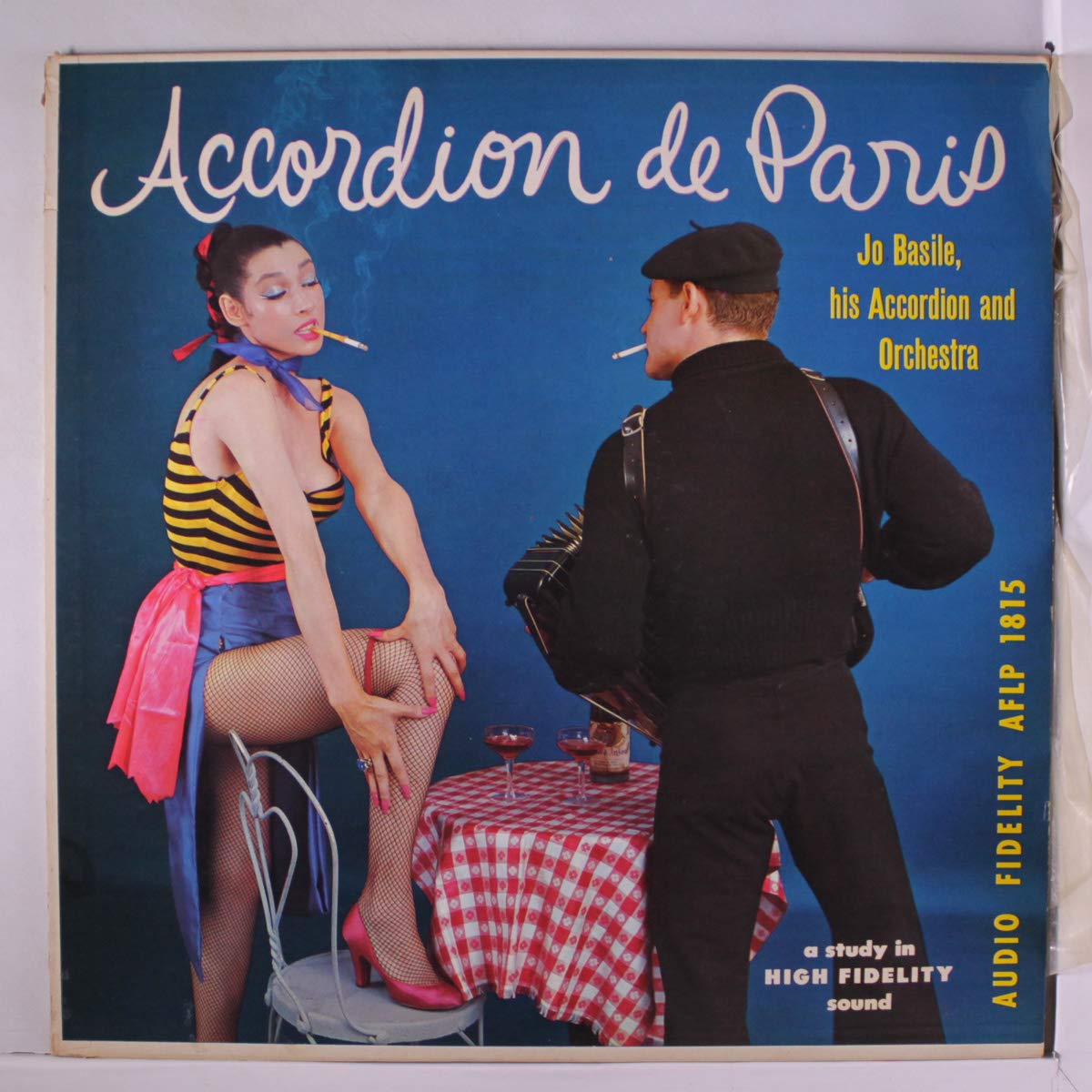
Jo Basile • Accordion de Paris


Jo Basile was the pseudonym of Joss Baselli, accordionist and veteran of the French music scene in the 1950s and 1960s.
Basile's parents were Italian emigrants to northern France, part of the large wave of Italians who came to work the coal mines in the Pas de Nord and Belgium. Although his parents ran a cafe, they were also great music enthusiasts, and Baselli began taking music lessons at the age of six. He and his brother Enrico both studied the accordion and, after a few years of serenading patrons in their parents' cafe, began playing on a semi-professional basis by their late teens.
After World War Two, Baselli met an accomplished accordion player and pioneer of the bal musette style, Gus Viseur, who encouraged him to pursue a career in music. Baselli moved to Paris in 1950 and several years later, while working a summer job in Pau, near the Spanish border, met the rising young chanteuse, Patachou. She offered him the job of principal accompanist, and as her career took off, rivalling Edith Piaf's in popularity, he became a recognized soloist in his own right. Patachou opened a cafe in the Montmartre section of Paris, which became the center of the bal musette scene. Around the same time, Joss married Gus Viseur's daughter.
In 1958, Patachou toured the U.S. and Baselli attracted the attention of Sid Frey, owner of the Audio Fidelity record label. Frey was about to release the first series of long-playing stereo records and was signing numerous international artists. Renaming him Jo Basile, Frey first recorded Baselli straight, playing instrumental versions of Patachou's hits and other French cafe tunes.
Then Baselli suggested he do some of the Italian songs he grew up playing in his parents' cafe, and the album, Rome with Love was released, with a cover featuring a sexy babe in Capri pants riding on the back of a Lambretta. Whether the cover had anything to do with the success of the record, Frey figured it was a winning combination, and most of the two dozen albums Basselli recorded for Audio Fidelity over the next five years followed a standard formula. Basselli played a dozen or so tunes associated with a particular country or city, and Frey slapped on a cover featuring another sexy babe in national garb riding on the back of the same red Vespa--with an appropriate license plate.
For the quantity of material reflected in this series, the quality of performances is quite high. Baselli was a virtuoso accordion player, whose talents are now comemorated in France by an annual award that bears his name, given for the best accordion performance. For the most part, though, the material doesn't match the musicianship.
A couple of the series, however, deserve a closer listen. Swingin' Latin is actually a set of early bossa nova tunes performed with the excellent Brazilian trio, Bossa Tres, and it's been reissued on CD recently as Jo Basile and Bossa Tres by Ubatuqui Records.
My favorite is Foreign Film Festival album, on which he swings through a set of tunes by Nino Rota and others with a crack group of New York session men that includes Bobby Rosengarden, Dick Hyman, Al Caiola, Milt Hinton, and Phil Kraus. It's a jazzy take on theme music from such early 1960s classics as "La Dolce Vita," "Rififi," and "8½" that shows Basselli could easily hold his own among players with such impeccable jazz chops and studio experience.
In all, Basselli's Audio Fidelity albums sold over 4 million copies in the U.S. He was awarded a prize by the American Accordion Association, and undoubtedly inspired many young men to take up the squeezebox--at least, until they discovered it tended not to attract sexy chick in Capri pants the way an electric guitar did.
Back in France, Basselli parted ways with Patachou and joined the studio team of the singer Barbara, who launched an enormously successful variety series on French television. Basselli not only performed on screen as both accompanist and soloist, he also worked as musical director and arranged hundreds of songs for the show.
He stayed with the show until 1967, when he reunited with Patachou for another tour of the U.S. When he returned to France, he began to turn his attention to composing and arranging. He wrote the score for the movie, "L'astragale," as well as for numerous television shows. One of the most notable of these was "Le Manège Enchanté," a stop-action animated series by Serge Danot. A BBC producer asked actress Emma Thompson's father, Eric, to translate and record an English language narration, but Thompson decided the scripts just didn't work in English, and he wrote his own story, even renaming the characters. As "The Magic Roundabout," the series was an even bigger success in the U.K. Basselli also composed the score for the full-length film Danot produced as a spin-off from the series, "Dougal and the Blue Cat".
Throughout the 1960s, Baselli also worked as a songwriter, and his best-known tune, "Free Again," was recorded by numerous Anglophone singers--most notably, Barbra Streisand, on the first track of her 1966 album, My Name is Barbra.
In 1972, Basselli hosted a series on French television titled, "Le monde de l'accordeon," which featured masters of the instrument and encouraged young people to take up and learn the instrument. This time, no chick in Capri pants was promised. He also founded his own music publishing company, Opaline, to oversee the rights to his various compositions, and wrote a popular set of music instruction books on playing the accordion. He died suddenly of a heart attack in 1982.
///////

Jo Basile era el seudónimo de Joss Baselli, acordeonista y veterano de la escena musical francesa en las décadas de 1950 y 1960.
Los padres de Basile eran emigrantes italianos al norte de Francia, parte de la gran ola de italianos que vinieron a trabajar en las minas de carbón del Pas de Nord y Bélgica. Aunque sus padres tenían un café, también eran grandes entusiastas de la música, y Baselli comenzó a tomar clases de música a la edad de seis años. Él y su hermano Enrico estudiaron el acordeón y, después de algunos años de serenatas en el café de sus padres, comenzaron a tocar de manera semi-profesional a finales de la adolescencia.
Después de la Segunda Guerra Mundial, Baselli conoció a un consumado acordeonista y pionero del estilo de la bal musette, Gus Viseur, quien le animó a seguir una carrera en la música. Baselli se trasladó a París en 1950 y varios años más tarde, mientras trabajaba en un trabajo de verano en Pau, cerca de la frontera española, conoció a la joven cantante en ascenso, Patachou. Ella le ofreció el puesto de acompañante principal, y a medida que su carrera despegaba, rivalizando con la popularidad de Edith Piaf, él se convirtió en un reconocido solista por derecho propio. Patachou abrió un café en el barrio de Montmartre de París, que se convirtió en el centro de la escena del bal musette. Más o menos al mismo tiempo, Joss se casó con la hija de Gus Viseur.
En 1958, Patachou realizó una gira por los Estados Unidos y Baselli atrajo la atención de Sid Frey, propietario del sello discográfico Audio Fidelity. Frey estaba a punto de lanzar la primera serie de discos estéreo de larga duración y firmaba con numerosos artistas internacionales. Renombrado Jo Basile, Frey grabó primero Baselli straight, tocando versiones instrumentales de los éxitos de Patachou y otras melodías de cafés franceses.
Luego Baselli le sugirió que hiciera algunas de las canciones italianas que tocó en el café de sus padres, y el álbum, Rome with Love fue lanzado, con una portada con una sexy nena en pantalones Capri montada en la parte trasera de una Lambretta. Si la portada tenía algo que ver con el éxito del disco, Frey pensó que era una combinación ganadora, y la mayoría de los dos docenas de álbumes que Basselli grabó para Audio Fidelity durante los siguientes cinco años siguieron una fórmula estándar. Basselli tocó una docena de canciones asociadas con un país o ciudad en particular, y Frey le dio una bofetada en una portada con otra chica sexy con atuendo nacional montada en la parte trasera de la misma Vespa roja, con una placa de matrícula apropiada.
Por la cantidad de material reflejada en esta serie, la calidad de las prestaciones es bastante alta. Baselli fue un virtuoso acordeonista, cuyos talentos son ahora conmemorados en Francia por un premio anual que lleva su nombre, otorgado a la mejor interpretación del acordeón. Sin embargo, en la mayoría de los casos, el material no coincide con la musicalidad.
Algunas de las series, sin embargo, merecen ser escuchadas más de cerca. Swingin' Latin es en realidad un conjunto de tempranas melodías de bossa nova interpretadas con el excelente trío brasileño Bossa Tres, y ha sido reeditado en CD recientemente como Jo Basile y Bossa Tres por Ubatuqui Records.
Mi favorito es el álbum del Festival de Cine Extranjero, en el que se mueve a través de un conjunto de temas de Nino Rota y otros con un grupo de hombres de sesión de Nueva York que incluye a Bobby Rosengarden, Dick Hyman, Al Caiola, Milt Hinton, y Phil Kraus. Es una versión jazzística de temas clásicos de principios de los sesenta como "La Dolce Vita", "Rififi" y "8½", que demuestra que Basselli puede valerse por sí mismo entre los músicos con un jazz impecable y una experiencia en el estudio tan impecable.
En total, los álbumes de Audio Fidelity de Basselli vendieron más de 4 millones de copias en los EE.UU. Recibió un premio de la Asociación Americana de Acordeón, e indudablemente inspiró a muchos jóvenes a tomar el squeezebox - por lo menos, hasta que descubrieron que tendía a no atraer a las chicas sexys en pantalones de Capri de la misma manera que lo hacía una guitarra eléctrica.
De vuelta en Francia, Basselli se separó de Patachou y se unió al equipo de estudio de la cantante Barbara, que lanzó una serie varietal de enorme éxito en la televisión francesa. Basselli no sólo actuó en la pantalla como acompañante y solista, sino que también trabajó como director musical y arregló cientos de canciones para el espectáculo.
Permaneció en el espectáculo hasta 1967, cuando se reunió con Patachou para otra gira por los EE.UU. Cuando regresó a Francia, comenzó a prestar atención a la composición y los arreglos. Escribió la partitura para la película "L'astragale", así como para numerosos programas de televisión. Una de las más notables fue "Le Manège Enchanté", una serie de animación de stop-action de Serge Danot. Un productor de la BBC le pidió al padre de la actriz Emma Thompson, Eric, que tradujera y grabara una narración en inglés, pero Thompson decidió que los guiones no funcionaban en inglés, y escribió su propia historia, incluso renombrando a los personajes. Como "The Magic Roundabout", la serie fue un éxito aún mayor en el Reino Unido. Basselli también compuso la partitura para el largometraje Danot producido como resultado de la serie "Dougal and the Blue Cat".
A lo largo de la década de 1960, Baselli también trabajó como compositor, y su canción más conocida, "Free Again", fue grabada por numerosos cantantes anglófonos, entre los que destaca Barbra Streisand, en el primer tema de su álbum de 1966, My Name is Barbra.

En 1972, Basselli presentó en la televisión francesa una serie titulada "Le monde de l'accordeon" (El mundo del acordeón), que presentaba a maestros del instrumento y animaba a los jóvenes a aprenderlo. Esta vez, no se prometió ninguna chica con pantalones de Capri. También fundó su propia compañía editorial de música, Opaline, para supervisar los derechos de sus diversas composiciones, y escribió un popular conjunto de libros de instrucciones musicales sobre cómo tocar el acordeón. Murió repentinamente de un ataque al corazón en 1982.
https://www.spaceagepop.com/basile.htm
Traducción realizada con el traductor www.DeepL.com/Translator


Friday, October 30, 2026

Si Zentner And His Orchestra • Up A Lazy River


Simon Hugh "Si" Zentner (June 13, 1917 in New York City – January 31, 2000 in Las Vegas, Nevada) was an American trombonist and jazz big-band leader.
Zentner played violin from age four and picked up trombone a few years later. As a teenager, he was awarded the Guggenheim Foundation Philharmonic Scholarship. He attended college for music and had intended to pursue a career in classical music, but became more interested in pop music after recording with Andre Kostelanetz. Zentner played in the bands of Les Brown, Harry James, and Jimmy Dorsey in the 1940s, then moved to Los Angeles, where he worked as a studio musician. He also landed a job with MGM from 1949 to the mid-50s, and was involved in the music for films such as Singin' in the Rain and A Star Is Born.
In the late 1950s Zentner put together his own studio big band and signed with Bel Canto Records. The Zentner band began recording for Liberty Records in 1959 releasing numerous successful pop/jazz albums during the 1960s and touring steadily with a large well-rehearsed outfit. He also briefly recorded for RCA Victor. Zentner was a tireless promoter and claimed to have played 178 consecutive one-night performances when the band was at its peak. His ensemble was voted "Best Big Band" for 13 straight years by Down Beat, and Zentner himself was voted Best Trombonist in Playboy Jazz Readers' Poll. Zentner was known for his bold, brash and bright playing with great breath control and distinctive vibrato. In 1962, his album Up a Lazy River (Big Band Plays the Big Hits, Vol. 2) (arranged by Bob Florence) won a Grammy Award for Best Pop Instrumental Performance.
Zentner's success was thoroughly unusual; he had a thriving big band going at a time when big band music was, for the most part, on the wane. The general downturn in interest eventually caught up to him, and by mid-decade the orchestra performed only on a limited basis despite recording through the late 1960s. He then moved to Las Vegas and accompanied Mel Tormé at the Blue Room of the Tropicana Hotel. In 1968 he became musical director of the long-running Vegas show Folies Bergere. It wasn't until the 1990s that Zentner returned to big band performance, assembling a new group and releasing several more albums. He suffered from leukemia late in life, though he continued performing into 1999; he died of the disease in early 2000.
 
///////
 
Simon Hugh "Si" Zentner (13 de junio de 1917 en Nueva York - 31 de enero de 2000 en Las Vegas, Nevada) fue un trombonista y líder de big-band de jazz estadounidense.
Zentner tocaba el violín desde los cuatro años de edad y se hizo con el trombón unos años más tarde. De adolescente, recibió la beca filarmónica de la Fundación Guggenheim. Asistió a la universidad para estudiar música y tenía la intención de seguir una carrera de música clásica, pero se interesó más por la música pop después de grabar con Andre Kostelanetz. Zentner tocó en las bandas de Les Brown, Harry James y Jimmy Dorsey en la década de 1940, y luego se trasladó a Los Ángeles, donde trabajó como músico de estudio. También consiguió un trabajo en MGM desde 1949 hasta mediados de los años 50, y participó en la música de películas como Singin' in the Rain y A Star Is Born.
A finales de los años 50, Zentner formó su propia big band de estudio y firmó con Bel Canto Records. La banda de Zentner comenzó a grabar para Liberty Records en 1959, publicando numerosos y exitosos álbumes de pop/jazz durante la década de 1960 y realizando giras constantes con un gran conjunto bien ensayado. También grabó brevemente para RCA Victor. Zentner era un promotor incansable y afirmaba haber realizado 178 actuaciones consecutivas en una sola noche cuando la banda estaba en su apogeo. Su conjunto fue votado como la "Mejor Big Band" durante 13 años consecutivos por Down Beat, y el propio Zentner fue votado como el mejor trombonista en la encuesta de los lectores de Playboy Jazz. Zentner era conocido por su forma de tocar, audaz y brillante, con un gran control de la respiración y un vibrato distintivo. En 1962, su álbum Up a Lazy River (Big Band Plays the Big Hits, Vol. 2) (arreglado por Bob Florence) ganó un premio Grammy a la mejor interpretación instrumental pop.
El éxito de Zentner fue totalmente inusual; tenía una gran banda próspera en un momento en que la música de las grandes bandas estaba, en su mayor parte, en declive. El descenso general del interés acabó por afectarle y, a mediados de la década, la orquesta sólo actuaba de forma limitada, a pesar de haber grabado hasta finales de la década de 1960. Entonces se trasladó a Las Vegas y acompañó a Mel Tormé en el Blue Room del Hotel Tropicana. En 1968 se convirtió en el director musical del longevo espectáculo de Las Vegas Folies Bergere. No fue hasta la década de 1990 cuando Zentner volvió a actuar con una gran banda, formando un nuevo grupo y publicando varios álbumes más. Sufrió una leucemia al final de su vida, aunque siguió actuando hasta 1999; murió de la enfermedad a principios de 2000.